


If you’ve ever tried teaching action verbs to a young child, you know that simply showing flashcards isn’t always enough.
Children learn best when they can move, play, and connect new words to real-life experiences. Whether you’re a parent practicing at home, a teacher planning your literacy centers, or a therapist working one-on-one with a child, finding activities that are both engaging and easy to prepare can sometimes feel like a challenge.
The good news is that teaching action verbs doesn’t have to be complicated.
Many of the best learning opportunities happen during everyday routines, story time, pretend play, and simple hands-on activities. With just a little creativity, you can help children build vocabulary, strengthen language skills, and gain confidence while they’re having fun.
In this post, I’m sharing some of my favorite action verbs activities that are easy to incorporate into your day—plus a low-prep resource if you’re looking for an option that saves you time.
Why Are Action Verbs Important?
Action verbs describe what someone or something is doing. They help children:
- Build expressive and receptive vocabulary
- Develop stronger language and communication skills
- Follow directions more successfully
- Answer WH questions with greater confidence
- Improve early reading comprehension
- Connect words with real-life experiences
- Build sentence and storytelling skills
- Strengthen visual discrimination
- Practice categorization and critical thinking
- Increase independence during learning activities
Because action verbs are used throughout everyday routines, they provide meaningful opportunities for repeated learning throughout the day.
1. Turn Everyday Moments Into Learning Moments
One of my favorite teaching tips is also the easiest. Talk about what your child is already doing.
Instead of simply saying, “Good job,” try saying:
“You’re jumping!”
“You’re eating your snack.”
“You’re washing your hands.”
“You’re reading a book.”
The more children hear these words in real-life situations, the more naturally they begin to understand and use them.
2. Play a Silly Action Game
This is always a favorite. Call out an action and let your child act it out.
“Can you hop like a bunny?”
“Can you dance?”
“Can you pretend to sleep?”
You’ll probably end up laughing together—and that’s exactly the kind of learning children remember.
3. Read Picture Books Together
Books are full of opportunities to practice action words. Instead of reading straight through, pause every now and then and ask questions like:
“What is the little girl doing?”
“What is the dog doing?”
“Can you show me someone who is running?”
These simple conversations help children connect pictures with language while building comprehension.
4. Match Action Verbs to Everyday Objects
Children understand action words more deeply when they connect them to the objects we use every day.
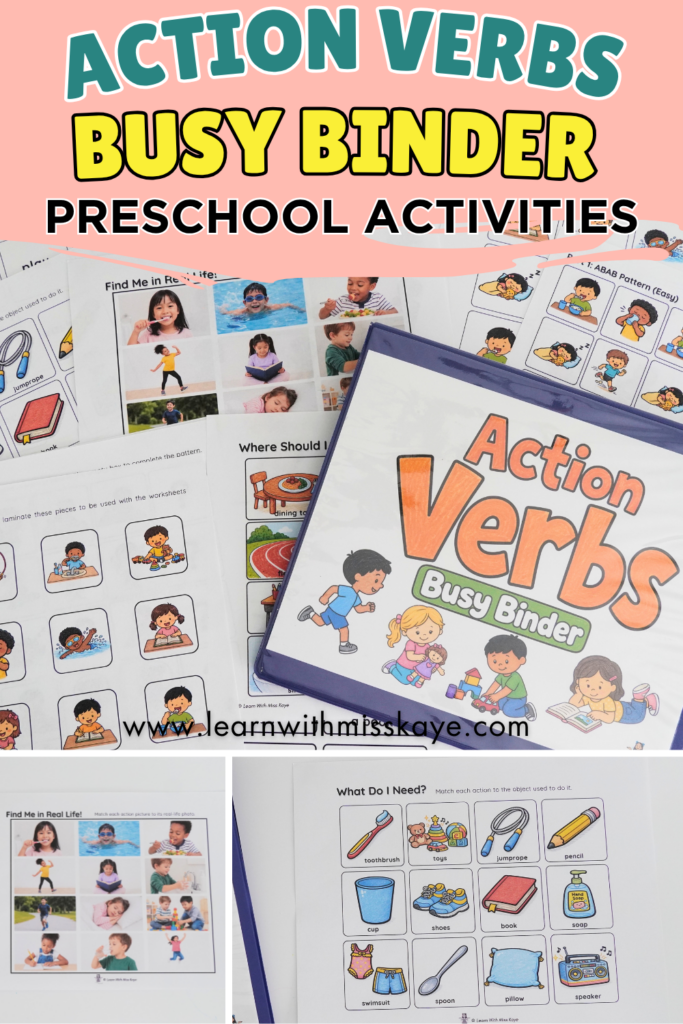
For example, they can think about which object matches an action like brush, read, or drink. This encourages children to make meaningful connections between vocabulary and real-life experiences instead of simply memorizing words.
As children make these connections, they’re also strengthening important cognitive and language skills that support everyday learning.
Skills practiced:
- Real-life connections
- Vocabulary development
- Language comprehension
- Object association
- Critical thinking
A Little Gift for You
Before we continue, I’d love to invite you to join Miss Kaye’s Learning Library.
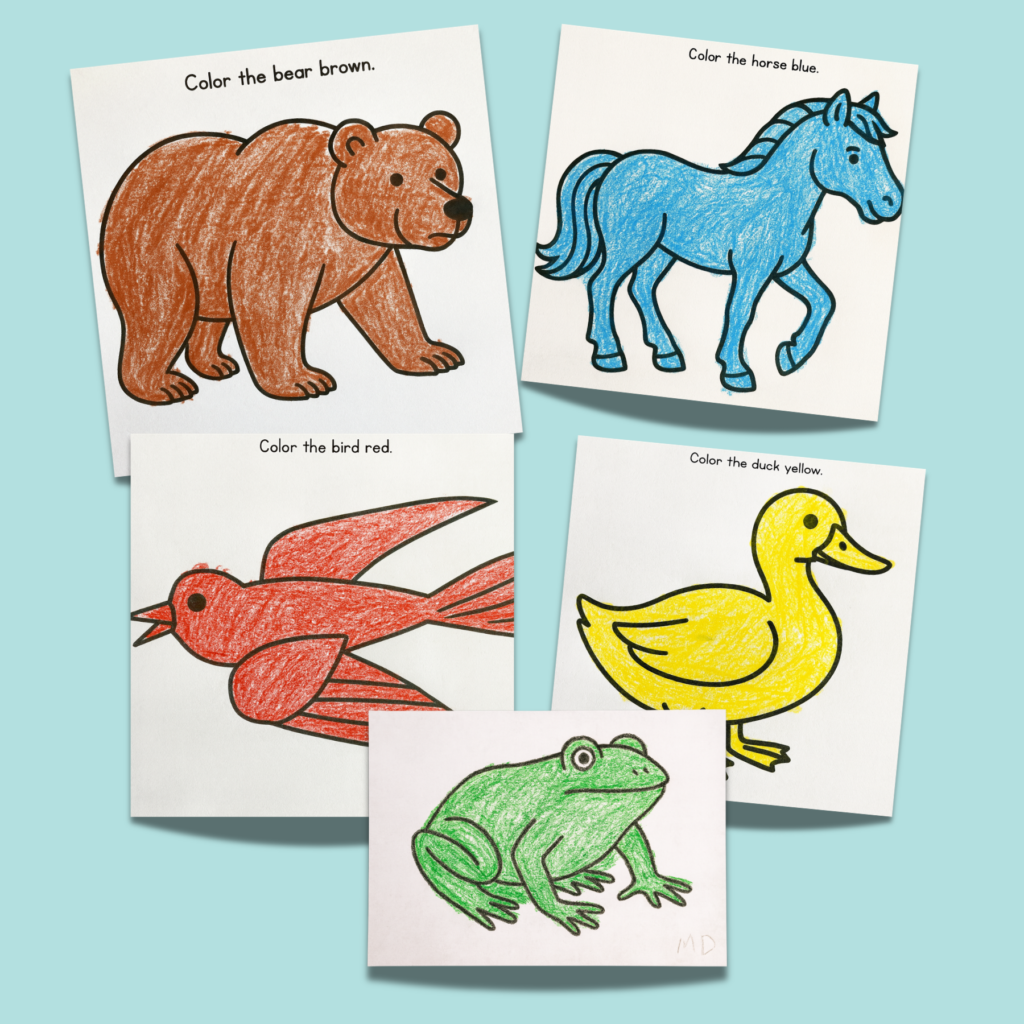
Inside you’ll find free story-themed activities (inlcuding Brown Bear worksheets), printables, and hands-on learning resources designed to help make learning fun and meaningful for little learners.
UNLOCK Access to
Miss Kaye Learning Library
Join Learn With Miss Kaye community and unlock a growing collection of free printables, story themed activities, hands-on learning , and exclusive resources for little learners — all in one place.
Take a Little peek at what’s inside..
COLORING PAGES

FUN CRAFTS
WORKBOOKS
5. Learn Through Hands-On Play
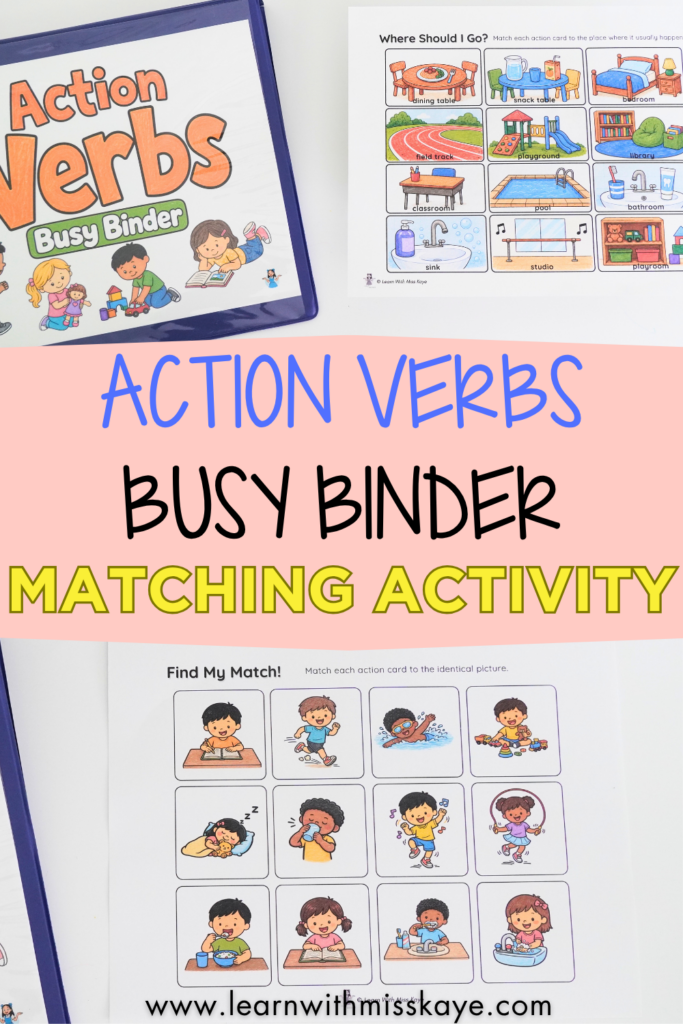
One of the easiest ways to introduce action verbs is by matching pictures with action words.
Children begin recognizing that the written word “jump” matches a picture of someone jumping, while “eat” matches someone enjoying a meal. This simple activity builds vocabulary while supporting early reading skills.
Skills practiced:
- Visual discrimination
- Action verb vocabulary
- Word recognition
- Reading readiness
6. Sort Everyday Actions
Ask children to sort pictures into groups that make sense.
For example:
- Healthy Habits
- Learning Activities
- Fun Activities
Sorting encourages children to think about how different actions are related while building vocabulary naturally.
Skills practiced:
- Categorization
- Critical thinking
- Vocabulary development
7. Connect Action Words to Real Life
Children learn best when they see that words connect to their everyday lives. After learning a new action word, ask questions like:
“Can you show me how you brush your teeth?”
“Who likes to read books?”
“What do you do before you go to bed?”
Making these real-life connections helps children remember new vocabulary much more easily.
Skills practiced:
- Language comprehension
- Expressive language
- Real-life vocabulary
8. Build Simple Sentences
Once children recognize action words, encourage them to use them in simple sentences.
For example:
- I run.
- I eat.
- I play.
- I read a book.
This helps children move beyond single-word vocabulary and begin using action verbs in everyday conversation.
Skills practiced:
- Sentence development
- Language skills
- Reading readiness
9. Match Pictures to Real Photographs
Clipart is wonderful for introducing new concepts, but real photographs help children transfer those skills to everyday life.
Matching illustrations with real-life images encourages children to recognize that the same action can look different depending on who is doing it.
Skills practiced:
- Visual discrimination
- Generalization
- Language development
10. Practice Through Independent Learning
Hands-on activities that children can complete independently provide valuable opportunities for repetition.
Repeated exposure to action words helps strengthen vocabulary while also building confidence and problem-solving skills.
Skills practiced:
- Independent work
- Fine motor skills
- Visual perception
Looking for Ready-to-Use Action Verb Activities?
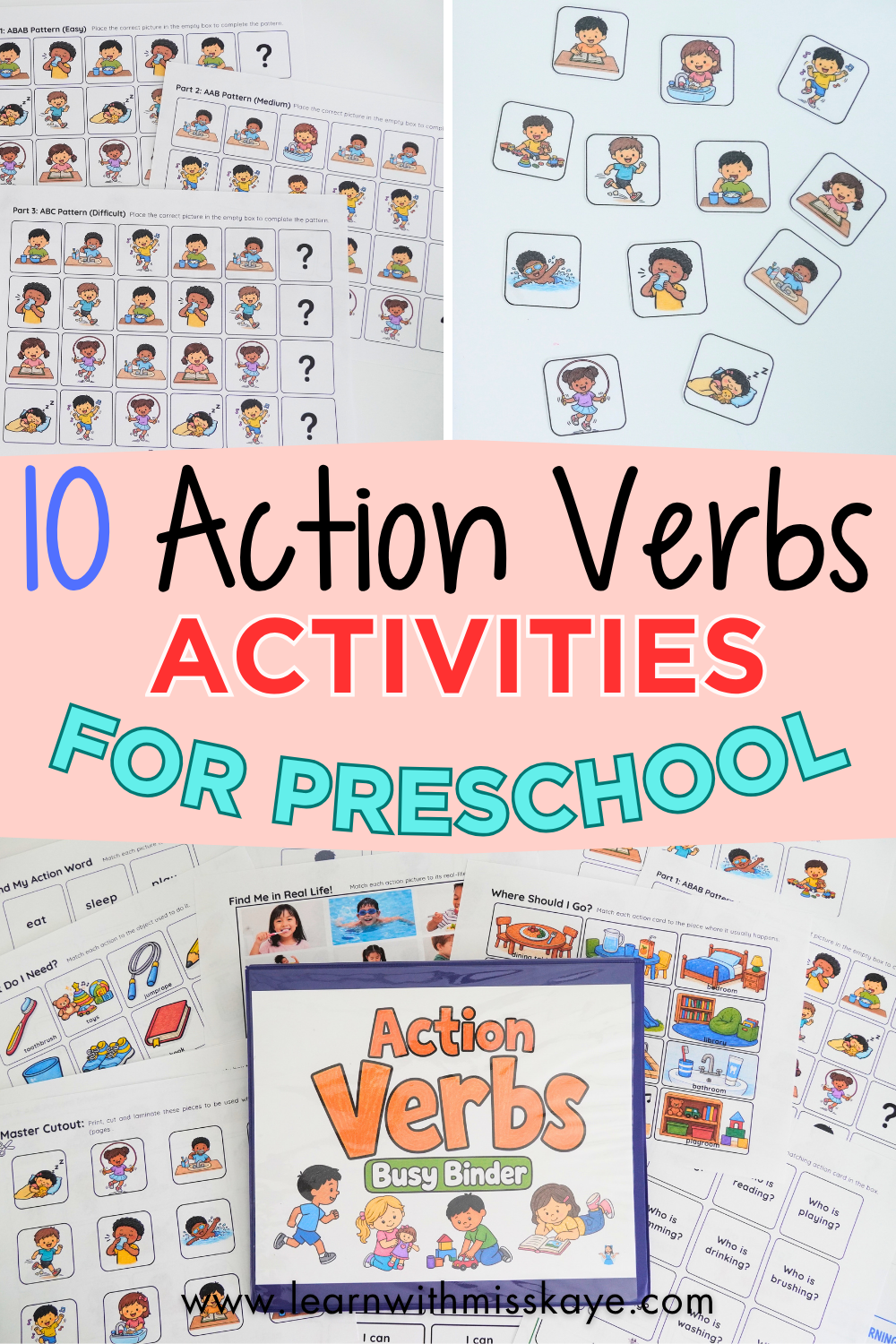
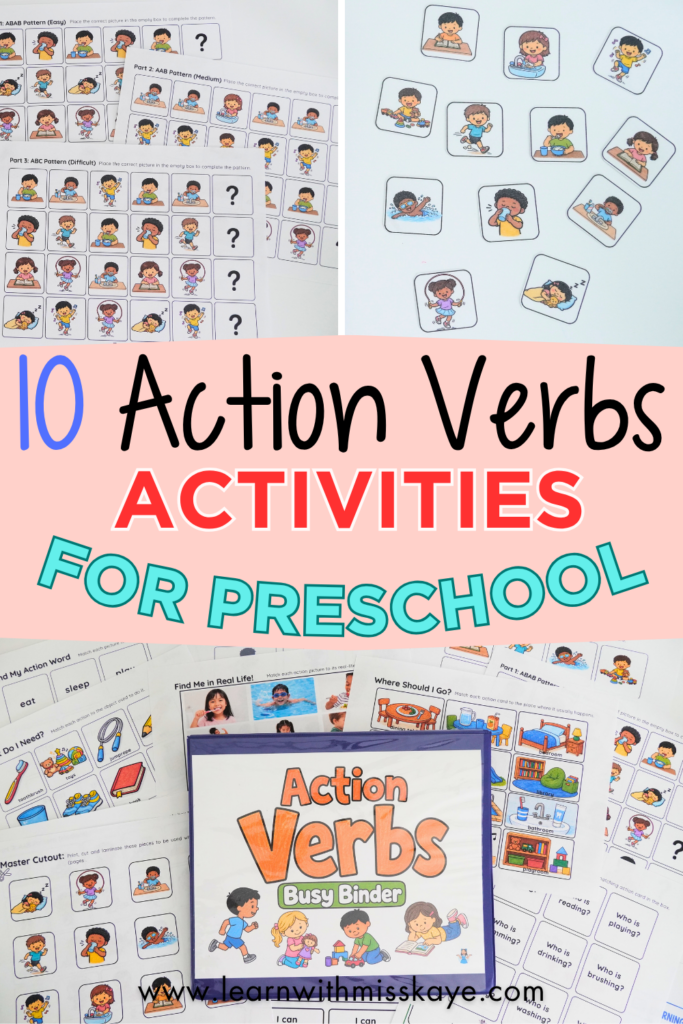
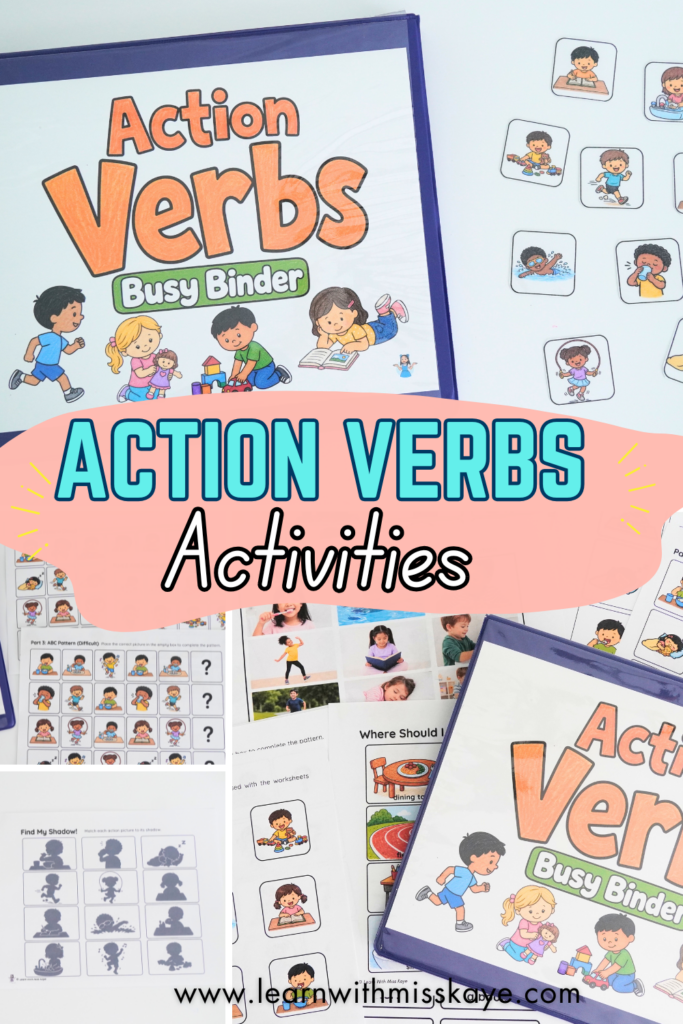
f you’re looking for a simple way to bring these activities into your classroom, therapy sessions, or home, the Low-Prep Action Verbs Busy Binder is designed to help you spend less time preparing materials and more time teaching.
Unlike traditional busy binders that require cutting multiple pages of pieces, you’ll only prepare one reusable master cut-out page that works across the entire binder. That means less cutting, less laminating, less Velcro, and fewer pieces to organize—saving you time, energy, and classroom resources.
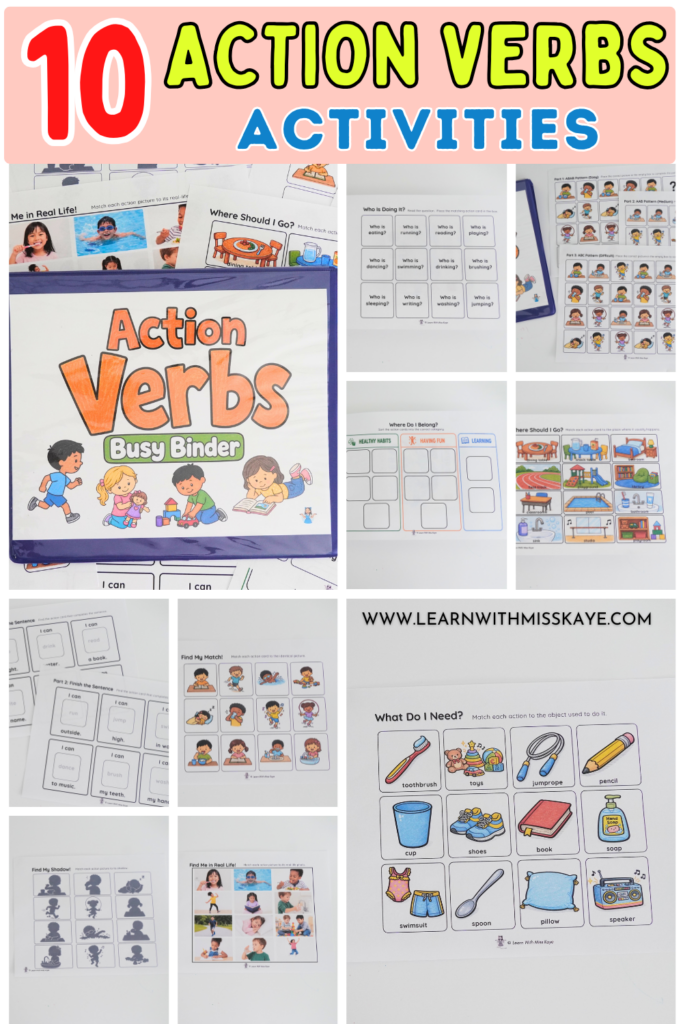
While children are engaged in hands-on learning, they’ll build essential skills including action verb vocabulary, language development, reading readiness, categorization, visual discrimination, sentence comprehension, fine motor skills, and independent work.